
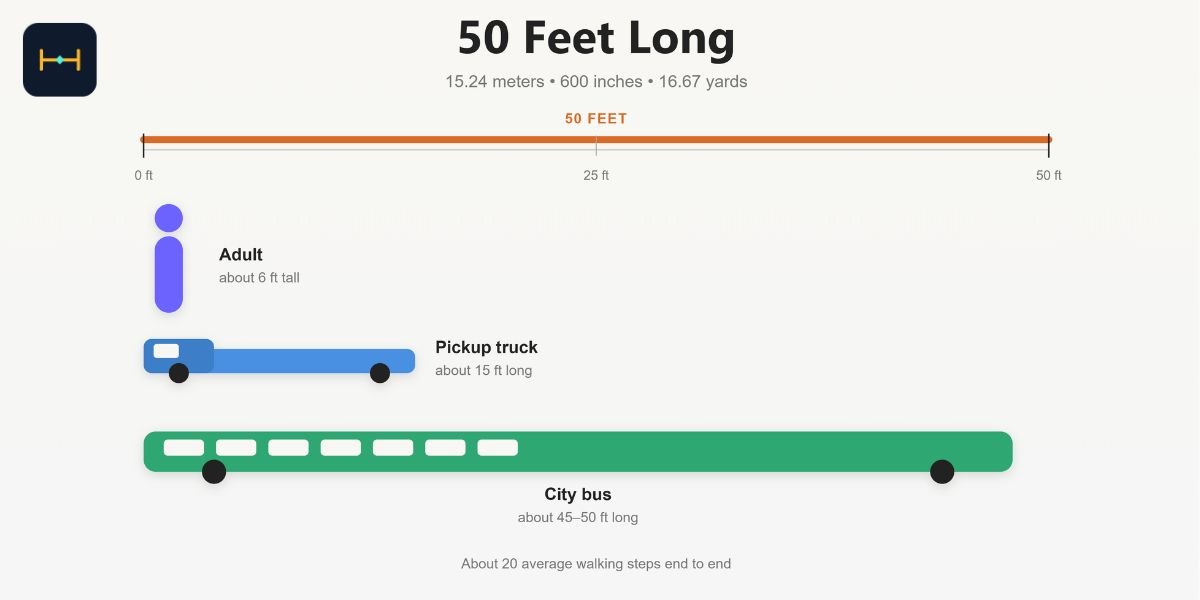
Someone tells you a driveway is 50 feet long and you just nod like you know exactly what that means. You don’t, and that’s normal. 50 feet long equals 600 inches, 15.24 meters, or 16.67 yards. But numbers alone won’t help you picture it. Here’s the fast way: it’s roughly the length of a professional semi-trailer truck, or about five average cars parked bumper to bumper. Now you’ve got something real to hold onto.
Many people search how far is 50 feet or how long is 50 feet visually because they need a quick, accurate comparison for home projects, sports, property measurements, construction, or simple curiosity. The surprising part is that our brains often misjudge distances without familiar reference points.
Keep reading to discover realistic examples, simple conversions, visual comparisons, and practical ways to estimate 50 feet without a measuring tape. You’ll also see how this distance compares with familiar objects so you can recognize it almost instantly. If you enjoy learning through everyday comparisons, you may also find our guide on How Long Is 10 Meters? helpful because it explains another commonly searched measurement using real life examples.
How far is 50 feet
Many people ask how far is 50 feet because the number alone is surprisingly difficult to picture. In reality, it is farther than most people expect. Imagine walking about 20 average steps, looking across the width of a small airport runway, or seeing the length of a 50-foot yacht at a marina. These familiar comparisons create an instant mental image, making it much easier to judge distances in everyday situations like home improvement, sports, parking, or outdoor activities.

Explore everyday objects, vehicles, and landmarks that measure about 50 feet long. Build a clear mental picture without using a measuring tape.
1. Standard Fire Hose
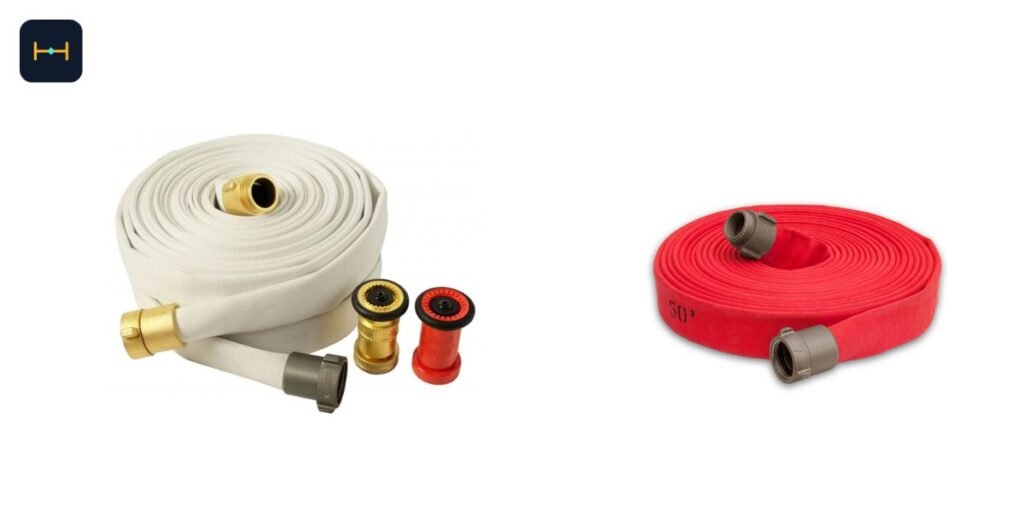
A standard fire hose is one of the easiest ways to picture 50 feet long because many attack hoses used by firefighters are manufactured in 50-foot sections (about 15.2 meters). When a single hose section is stretched out, it gives you an almost exact visual representation of how long is 50 feet without needing a tape measure.
You have probably seen these hoses rolled up on a fire engine, making them appear much shorter than they really are. Once connected and fully extended, a single section reaches surprisingly far across a street, parking lot, or large yard. Fire departments often connect several 50-foot sections together to reach buildings, which means a complete hose line can extend hundreds of feet during an emergency.
This comparison works well because it uses a real object with a standardized length. If you ever see firefighters laying out one hose section, you already have a reliable mental picture of how far is 50 feet and can estimate similar distances with much more confidence.
2. Aerial Fire Truck
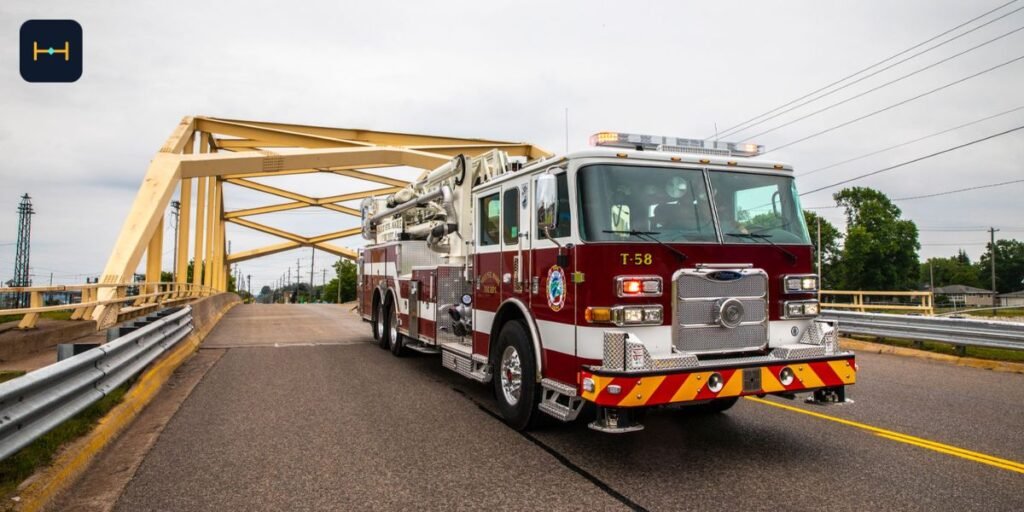
An aerial fire truck is another excellent example for understanding 50 feet long. Many ladder trucks measure 45 to 55 feet from front to back, placing many models very close to the 50-foot mark. Their impressive size makes them one of the largest emergency vehicles on public roads.
Because of their length, these trucks need extra room to turn corners and often occupy much of a city street when responding to emergencies. While most people focus on the towering ladder, the vehicle itself is surprisingly long. Seeing one parked beside regular cars instantly shows how much space 50 feet actually covers.
Using an aerial fire truck as a reference makes the measurement feel practical instead of abstract. The next time you pass one at a fire station or on the road, you’ll have a clear idea of how long is 50 feet visually without thinking about numbers alone.
3. Small Airport Runway Width
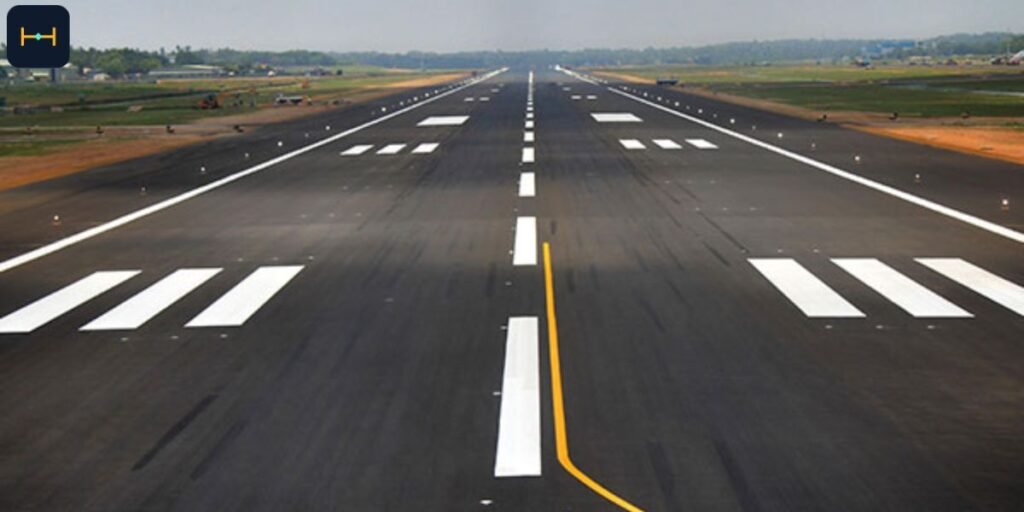
Many small airports have runways that are approximately 50 feet (15.2 meters) wide, making runway width a useful way to visualize this measurement. While runway lengths vary greatly, the width at smaller general aviation airports often stays close to this dimension, providing a realistic comparison.
Standing at one edge of a runway and looking across to the other side gives a better sense of the distance than reading “50 feet” on paper. Even though it may not seem especially wide from above, pilots rely on every foot of that space during takeoff and landing. That perspective shows why accurate distance judgment is so important in aviation.
This comparison is especially helpful because it connects the measurement to a real place many people have seen in person or in photos. If you’ve ever watched a small aircraft taxi down a runway, you already have a practical visual reference for how far is 50 feet.
4. Futsal Court Width
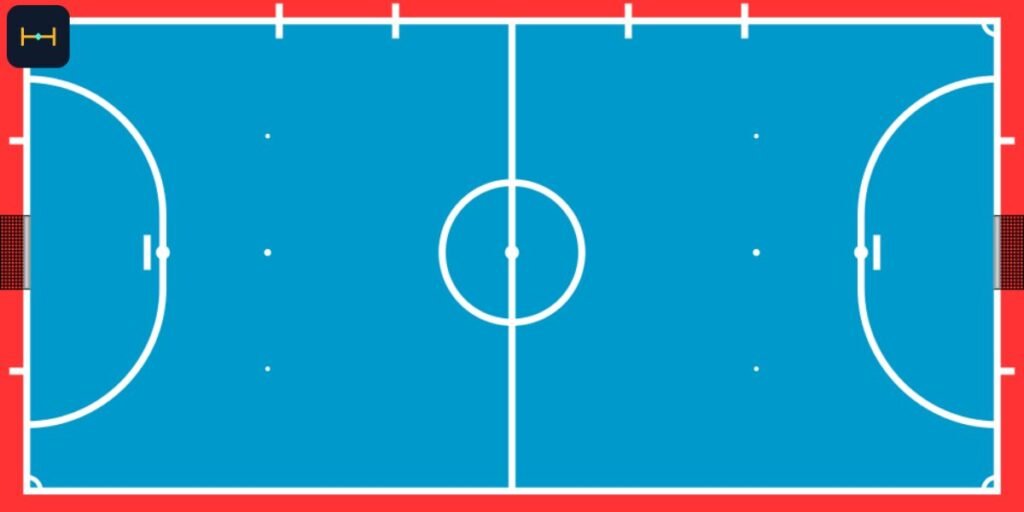
The width of a standard futsal court is commonly around 50 feet, depending on the venue and level of competition. This makes it a familiar sports reference for anyone trying to understand how long is 50 feet through everyday spaces rather than measurements alone.
Unlike a full-size soccer field, a futsal court is compact and designed for quick passes, close ball control, and fast-paced action. Looking from one sideline to the other covers about 50 feet, giving players enough room to move while keeping the game exciting and continuous.
Using a futsal court as a comparison is useful because sports spaces are easier to remember than numbers. If you’ve played or watched futsal, you can picture the court’s width almost instantly, making it much easier to estimate 50 feet in parks, buildings, or open areas without using measuring tools.
5. Twenty Average Walking Steps

For most adults, 20 average walking steps cover close to 50 feet (15.2 meters). While stride length varies from person to person, an average step is about 2.5 feet, making twenty natural steps a quick way to estimate how long is 50 feet without using any measuring tools.
Think about walking from your front door to the sidewalk or across a small parking lot. Instead of guessing the distance, simply count twenty comfortable steps. Most people are surprised by how accurately this simple method represents how far is 50 feet, especially when measuring outdoor spaces, gardens, or driveways.
This comparison is useful because everyone can use it anywhere. You don’t need a ruler or tape measure. Just count your steps, and you’ll have a practical mental picture of 50 feet that becomes easier to recognize over time.
6. Peggy’s Point Lighthouse

Located in Peggy’s Cove, Nova Scotia, Peggy’s Point Lighthouse stands at approximately 50 feet (15.2 meters) tall. Although it is famous for its striking white tower and bright red roof, its height also makes it a perfect reference for visualizing 50 feet.
Millions of visitors photograph this lighthouse every year, often without realizing its true size. Perched on massive granite rocks beside the Atlantic Ocean, it appears even taller because of its dramatic surroundings. Its compact design proves that a 50-foot structure can still dominate a landscape.
If you’ve seen pictures of Peggy’s Point Lighthouse, imagine laying the tower on its side. That length closely matches 50 feet, making it much easier to understand the measurement than reading a number alone.
7. Dignity Sculpture, South Dakota

The Dignity Sculpture near Chamberlain, South Dakota, rises about 50 feet high, making it one of the largest public artworks in the United States. This impressive stainless-steel monument provides a memorable way to picture how long is 50 feet visually.
The sculpture represents a Native American woman wrapped in a star quilt, with more than one hundred diamond-shaped panels reflecting sunlight throughout the day. Because it overlooks the Missouri River from a hilltop, its full height becomes even more dramatic when viewed from a distance.
Large landmarks are easier to remember than numbers, which is why this sculpture makes an excellent comparison. Whenever you picture the towering monument, you can immediately visualize what 50 feet looks like in real life.
8. 50-Foot Yacht
A 50-foot yacht measures almost exactly 50 feet (15.2 meters) from bow to stern. Yachts in this size range are popular for private cruising because they offer spacious cabins, comfortable seating, and enough deck space for entertaining while remaining manageable for experienced boat owners.
At a marina, a 50-foot yacht stands out among smaller boats. It is long enough to include multiple living areas yet compact enough to fit into many standard marina slips. Many people are surprised that a vessel this size can comfortably accommodate overnight trips for families or small groups.
Because the measurement is built into its name, a 50-foot yacht is one of the easiest comparisons to remember. If you’ve ever seen one docked along a waterfront, you already have an accurate picture of how far is 50 feet.
9. Adult Humpback Whale
An adult humpback whale can grow to 45 to 60 feet in length, with many reaching around 50 feet. That makes this magnificent marine mammal one of nature’s best examples for understanding 50 feet long.
Although humpback whales are famous for breaching completely out of the water, only a portion of their enormous bodies is visible during those spectacular jumps. Seeing one beside a whale-watching boat highlights just how massive a 50-foot animal really is. Despite their size, humpbacks feed mainly on tiny fish and krill.
Comparing 50 feet to a humpback whale transforms an abstract measurement into something unforgettable. It helps readers appreciate both the distance and the incredible scale of one of the ocean’s largest creatures.
10. Large Railroad Boxcar
A large railroad boxcar is typically 50 feet long, making it an excellent real-world comparison. These freight cars are designed to transport goods over long distances and are a familiar sight on railway lines throughout North America.
When a freight train passes by, a single boxcar often seems shorter than it actually is because several cars are connected together. Looking at just one railcar, however, reveals how much ground 50 feet really covers. Modern freight trains may include dozens or even hundreds of these boxcars linked in a single journey.
This comparison is especially practical because many people see freight trains regularly. The next time a boxcar rolls past a railway crossing, you’ll have an instant and reliable visual reference for how long is 50 feet without needing any measuring equipment.
Conclusion
50 Feet Long becomes much easier to understand when you stop thinking about numbers and start thinking about familiar objects. Whether you picture a standard fire hose, a 50-foot yacht, a humpback whale, or even twenty average walking steps, each comparison answers how long is 50 feet in a way that’s practical and memorable. Once you connect the measurement to something you’ve seen before, estimating this distance becomes almost effortless.
I hope these real-life comparisons helped you clearly visualize how long 50 feet really is. If you enjoy learning measurements through simple everyday examples, don’t forget to bookmark our website for more guides on feet, inches, meters, and other size comparisons that make understanding distances quick and easy.